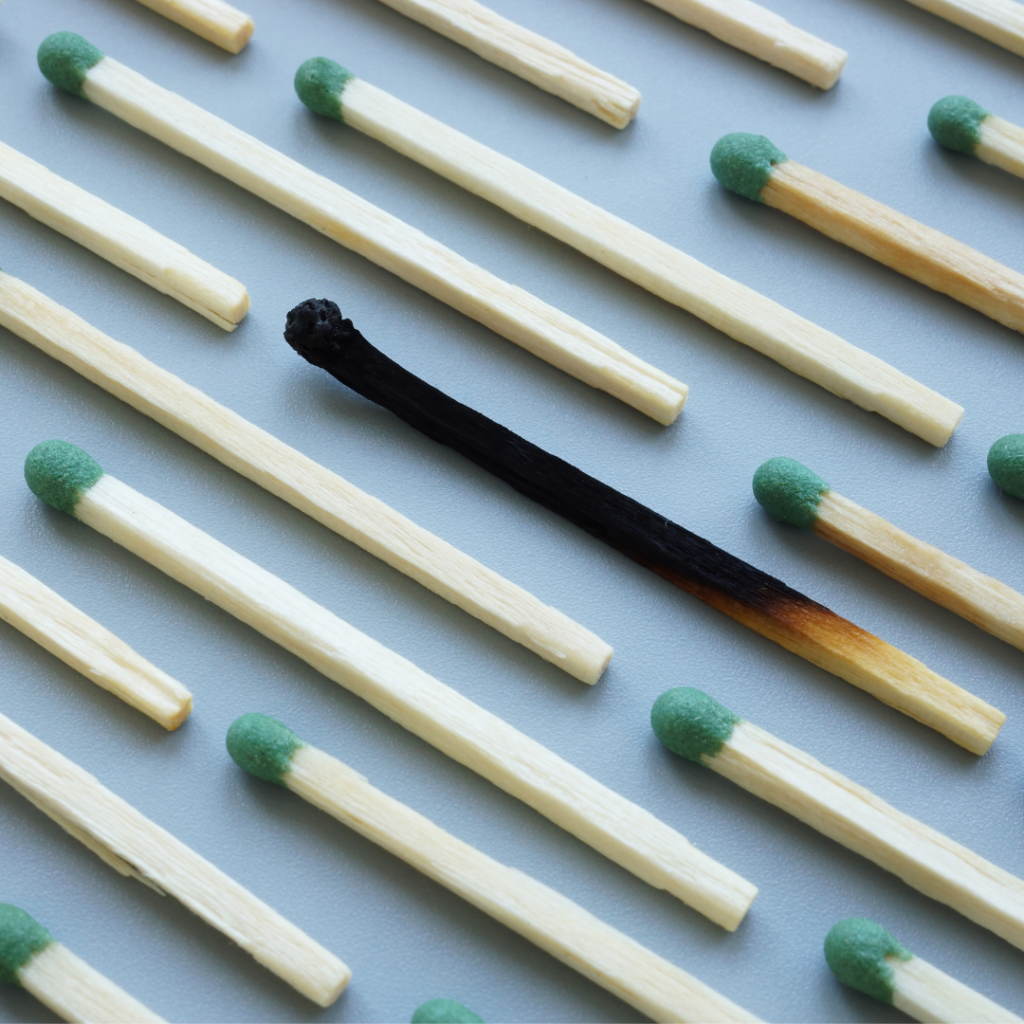

Why you can still feel exhausted after a good night’s sleep, and the seven types of rest every parent needs,
“I slept for eight hours. So why do I still feel exhausted?”
Have you ever wondered that? I certainly have.
For a long time, I thought tiredness had one obvious solution:
If only I could get more sleep, I’d feel better.
If only Amelia would sleep through the night. If only I could get to bed earlier. If only I could catch up at the weekend. Surely then I would feel like myself again.
But something did not quite add up.
Even on the rare nights when I slept well, I could still wake up feeling depleted.
My body may have slept. My mind hadn’t.
Before I had even got out of bed, it was already moving through the day ahead. What needed doing? What might I forget? Who needed what? What had to happen next?
Looking back at my own experience of parental burnout, I can see something I did not understand at the time:
Sometimes we are not only tired. We are depleted in ways sleep alone cannot fix.
When rest doesn’t feel restful
Maybe you recognise this too.
You finally get half an hour to yourself. Nobody needs anything from you. You have been longing for a break.
And yet, rather than sitting down, you put on a load of washing, reply to a message, order the birthday present, check tomorrow’s schedule or clear something off the kitchen counter.
And suddenly your precious half hour is gone.
For a long time, I thought I was simply bad at resting. Now I think it was something else.
When you spend years thinking, planning, anticipating, remembering and looking after other people, your mind becomes very used to being on. Stopping can feel strangely uncomfortable.
There is always something else that could be done. And if you are anything like me, doing that thing can sometimes feel easier than sitting still and noticing just how exhausted you actually are.
That is one reason I find the idea of the seven types of rest, developed by physician Dr Saundra Dalton-Smith, so useful.
Instead of only asking:
“Did I sleep enough?”
we can ask:
“What kind of rest am I actually missing?”
That shift matters, because rest is not one thing.
The seven types of rest for parents
You won’t need all seven in equal amounts every day. The point is to notice which kind of rest you may be missing right now.
1. Physical rest
This is the type of rest we usually think of first.
Sleep matters, of course. But physical rest can also mean slowing down, putting your feet up, stretching gently, lying on the sofa for twenty minutes or choosing a restorative yoga practice instead of pushing yourself through another demanding workout.
Sometimes our bodies do not need another challenge. They need recovery.
And for many mothers, even recognising that can be difficult. We are so used to continuing, doing one more thing, completing one more task and getting through one more day, until eventually the body starts asking rather more loudly.
2. Mental rest
This is the one I think many mothers are desperately short of.
Meal planning, appointments, school messages, birthdays, childcare, work deadlines, what needs buying, what needs washing, what needs remembering tomorrow.
The mind rarely gets to finish one task before the next one appears.
This is the mental load, and much of it is invisible. Nobody sees the tabs open in your head, but they still consume energy.
Mental rest is not about forcing your mind to become completely blank. It is about creating moments in which you are not responsible for remembering, organising or solving the next five things.
Sometimes that might mean writing things down instead of holding them in your head. Sometimes it might mean a quiet walk. Sometimes it might simply mean ten minutes without input.
And sometimes it requires something more.
Twice a year, I take myself away for 48 hours and stay in an Airbnb on my own. I absolutely treasure those two days.
Not because I want to escape from my family, but because, for 48 hours, I do not have to coordinate anything with anyone.
I eat when I am hungry. I walk when I feel like walking. I read, practise yoga, sleep or do absolutely nothing. There is no timetable to negotiate, nobody else’s needs to anticipate, no discussion about what we are going to eat or what time we need to leave.
For a short while, I am responsible only for myself.
Over time, I have realised that this is one of the deepest forms of rest for me:
a temporary release from responsibility.
Most of us cannot disappear for 48 hours every time we need mental rest. But perhaps we can ask a smaller question:
Where could I create even ten minutes today in which I am not coordinating, anticipating or managing anything for anyone else?
3. Emotional rest
Parents spend an enormous amount of time holding other people’s emotions. We comfort, reassure, encourage, stay patient and try to regulate ourselves while helping our children regulate themselves.
Often, we are also trying to protect the people around us from how overwhelmed we actually feel.
Emotional rest means having somewhere you do not need to pretend. Somewhere you do not have to say “I’m fine”when you are not.
It might be an honest conversation with a friend, your partner, a therapist or a coach. Someone with whom you can simply say:
“I am finding this really hard.”
Without immediately having to minimise it, explain it or solve it.
Sometimes being allowed to put down what you are carrying, even briefly, is a form of rest in itself.
4. Social rest
Not every interaction restores us.
Some people allow us to exhale. Others require energy. Perhaps you feel you need to be cheerful, capable, helpful, interesting or available.
Social rest can mean seeking out the relationships where you feel safe enough to simply be yourself. But it can also mean saying no, declining an invitation, leaving a WhatsApp message unanswered until tomorrow or choosing an evening alone rather than another obligation.
This is not about withdrawing from people. It is about noticing which relationships replenish you and which ones require energy you may not currently have.
5. Sensory rest
Parenthood can be incredibly noisy.
Someone is talking. Something is beeping. A screen is glowing. A notification appears. The television is on. Someone touches you. Someone calls your name. Again.
Even when we barely notice it consciously, our brains are constantly processing stimulation.
Sensory rest can be very simple: turning off notifications, putting your phone in another room, driving without the radio, dimming the lights, closing your eyes for a few minutes or sitting in silence.
These tiny pauses matter, especially when your system has been taking in more than it can comfortably process.
6. Creative rest
Creative rest does not mean adding another hobby to your schedule. You do not need to take up painting or pottery, or finally finish that craft project you bought six months ago.
Creative rest is about receiving rather than producing.
It can come from walking somewhere beautiful, looking at the mountains, being beside the lake, listening to music or simply noticing the light changing at the end of the day.
These moments remind us that life is not only made up of tasks. There is a world beyond what needs doing, and sometimes we need to remember that.
7. Spiritual rest
Spiritual rest does not have to mean religion. It is about connection: to your values, to meaning, to community, to nature or to something larger than the demands of this particular Tuesday afternoon.
For some people, that comes through faith or prayer. For others, it may come through meditation, yoga, nature, gratitude or simply pausing long enough to remember what actually matters.
When life becomes dominated by logistics, spiritual rest can help us reconnect with the person underneath all the roles we perform.
Mother. Partner. Professional. Organiser. Caregiver.
There is still a you underneath all of that.
What kind of rest are you actually longing for?
One of the things I have learned through my own burnout, and through supporting other parents, is that we often try to solve exhaustion with more effort.
A better routine. A better planner. More discipline. More efficiency.
Sometimes those things help.
But sometimes the problem is not that we are badly organised.
We are simply depleted.
And if that is the problem, another productivity strategy is unlikely to be the answer.
So instead of asking:
“Why am I still so tired?”
try asking:
“What kind of rest do I need today?”
Maybe you need sleep. Maybe you need quiet. Maybe you need somebody else to make the decisions. Maybe you need to tell someone how you actually feel. Maybe you need an evening without plans, time outside or ten minutes when nobody asks anything of you.
The point is not to diagnose yourself perfectly. It is simply to become curious.
You do not have to earn rest
This may be the reminder I need most often myself.
Many of us have quietly learned that rest comes afterwards. After the kitchen is tidy. After the emails are answered. After the work is finished. After the children are settled. After everyone else is okay.
But there is a problem with that:
Everything else is never done.
There will nearly always be one more thing you could finish before you stop.
That is why rest cannot be the reward for completing your life.
Rest is part of what allows you to live it.
You do not need to reach breaking point first. You do not need to prove you are exhausted enough. And you do not need to justify needing something for yourself.
Rest is not something you earn. You need it because you are human.
So perhaps that can be your gentle reminder today.
Pause for a moment and ask:
What kind of rest am I actually longing for?
Then choose one small, realistic way of giving yourself a little of it. Not once everything else is done. Today.
If tiredness has become something more
Sometimes exhaustion is simply exhaustion.
But if you have been running on empty for a long time, and you are also noticing overwhelm, irritability, emotional distance or the feeling that you are no longer quite yourself, it may be worth looking more closely at what you are experiencing.
My free Parental Burnout Self-Test offers a gentle first step. It can help you reflect on where you are now and whether you might need more support.
Take the free self-test.